
Polygon.com.
In some ways, The Odyssey’s ending feels inevitable and totally predictable. After all, in the 2,700 years since it was first written down, the title of Homer’s epic poem has become synonymous with any long, meandering journey home. The king of Ithaca spends 10 years trying to reach his palace after the end of the Trojan War, encountering all sorts of mythical beings along the way. But what happens after he arrives back in Ithaca?
[Ed. note: Light spoilers follow for Christopher Nolan’s The Odyssey follow.]
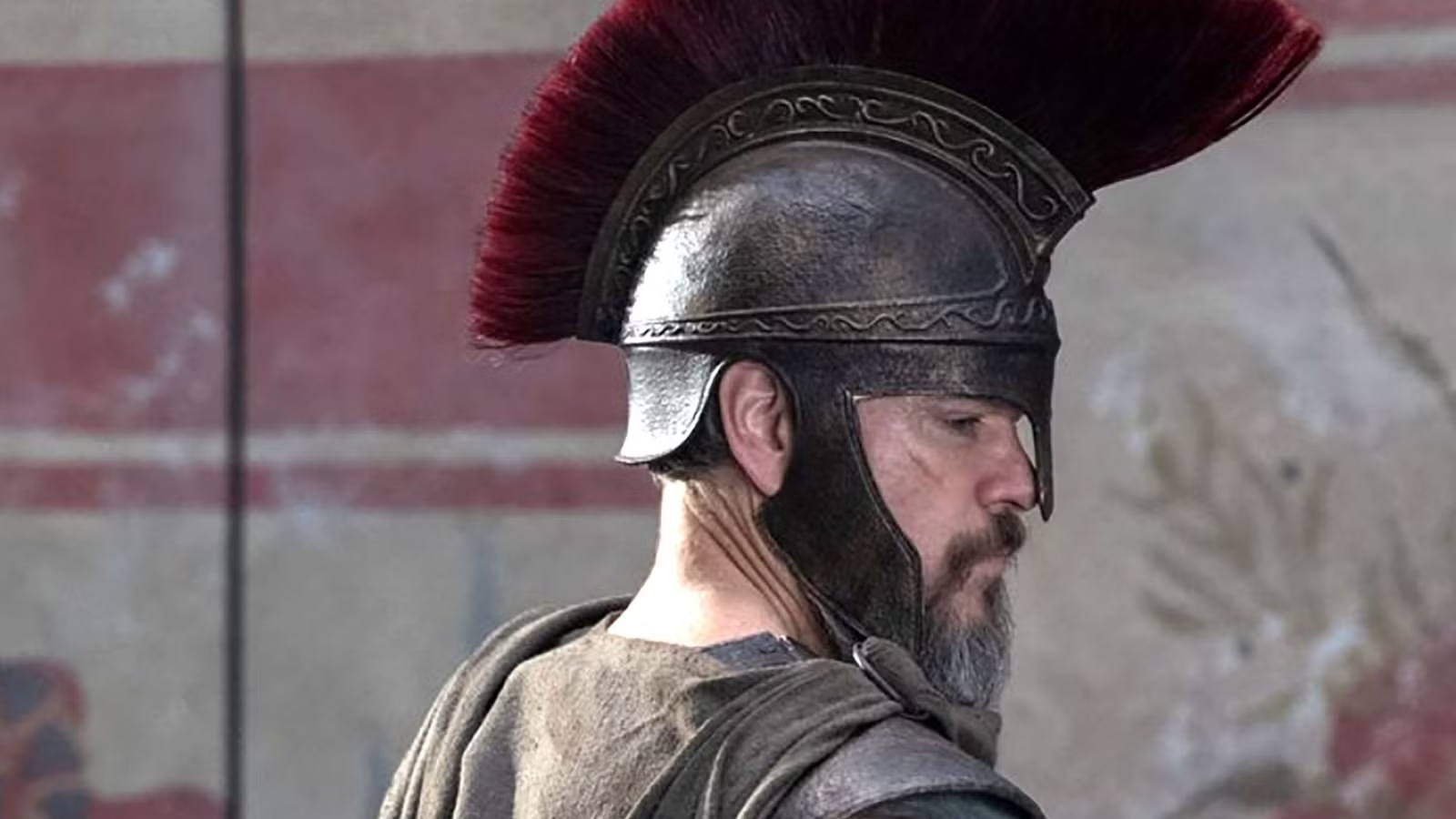
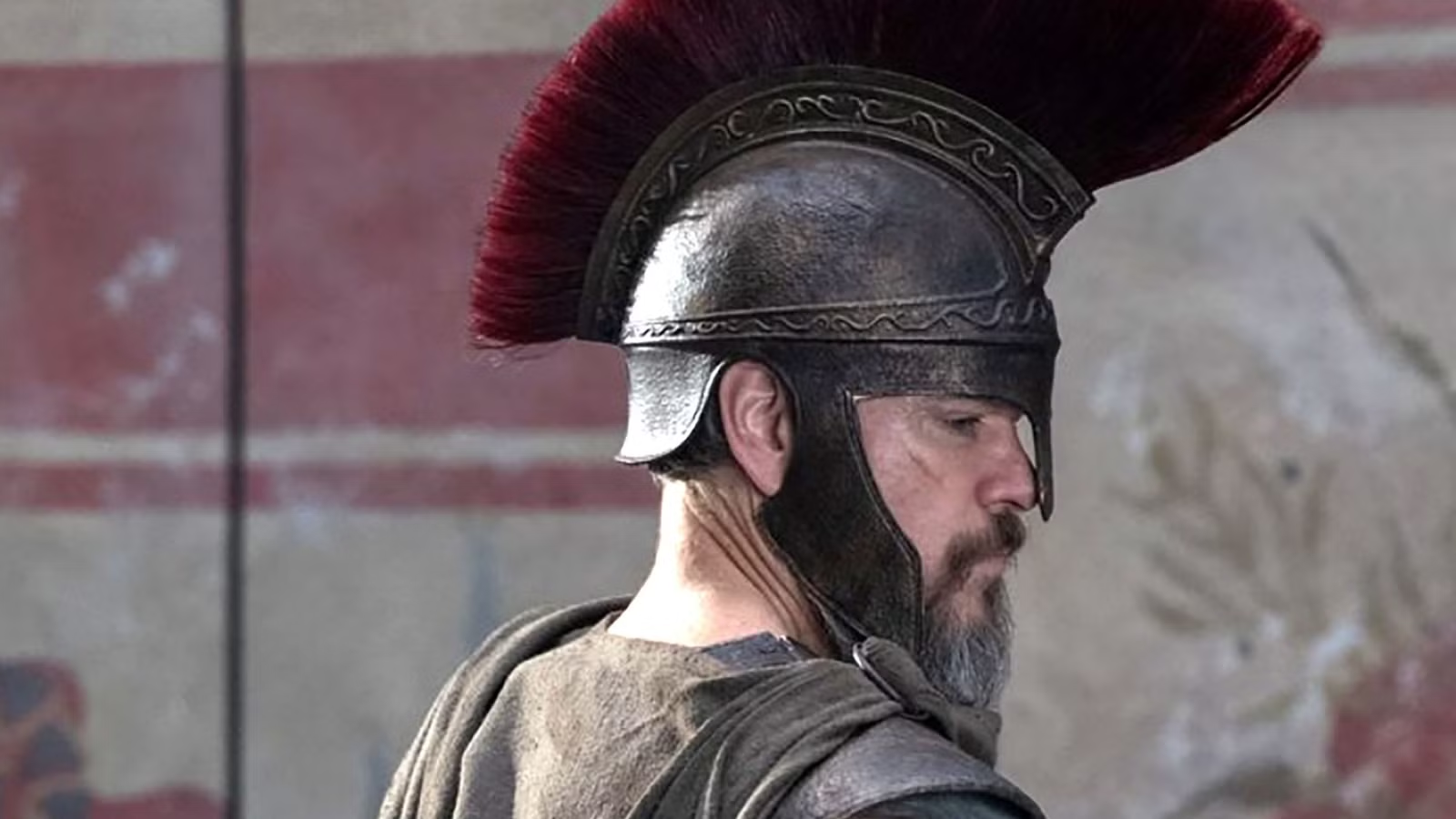
True to the source material, Matt Damon’s Odysseus does indeed make it home at the end of Christopher Nolan’s movie. Like in the poem, he’s unrecognizable to almost everyone and has to prove his identity to his wife and son, Penelope (Anne Hathaway) and Telemachus (Tom Holland). He also has to fend off and slay the many suitors looking to marry Penelope and assume control of Ithaca. As a mythical figure who probably never existed to begin with, debating Odysseus’ canonical ending is something of a moot point, and yet there’s plenty of historical literature out there that tells us what happens to him after The Odyssey ends.
Christopher Nolan’s The Odyssey ending explained
While Christopher Nolan doesn’t exactly shy away from incorporating gods and mythical creatures into the mix for The Odyssey, the movie is certainly a bit more grounded in realism. In the original poem, after Odysseus slays the suitors, a civil war erupts on Ithaca. The families of the slain suitors seek revenge against Odysseus. Only because the goddess Athena forces peace is the bloodbath prevented — and the tale ends. Nolan offers no such divine intervention, but he also skips the potential the civil war entirely.
Instead, Nolan’s aesthetics seem to echo what happens at the end of The Lord of the Rings: Return of the King. At the end of his long adventure, Odysseus takes his wife and sails off into the unknown west, leaving Telemachus as the unchallenged king of Ithaca. It effectively communicates the end of an age and the beginning of the next, one in which the magic of the gods is less present in the world than it once was. This is somewhat in-line with prophecies Odysseus hears in the epic, namely that even after he returns home, his travels are far from over. However, plenty of other storytellers have put their own spin on the tale of Odysseus.
Alfred, Lord Tennyson’s “Ulysses” — a poem written in 1833 and published in 1842 — sees Odysseus bored by domestic life on Ithaca, so he leaves Telemachus to govern while he sets sail with his fellow mariners: “To sail beyond the sunset, and the baths / Of all the western stars, until I die.” He also speaks of a plan to “seek a newer world.” That certainly aligns with Nolan’s vision.

Nikos Kazantzakis’ The Odyssey: A Modern Sequel is an even more ambitious 20th-century continuation of that same sort of story. After growing bored, Odysseus embarks on yet another adventure across the entire world in which he meets fictional characters modeled after Buddha, Don Quixote, and Jesus Christ. His final journey in Antarctica ends with an iceberg overturning his small boat, causing him to sink into the sea.
Perhaps the most accurate — and closest to canonical — sequel to The Odyssey, however, is very different.
The Telegony completes the Epic Cycle with another odyssey
Another major deviation from the source material in Nolan’s The Odyssey has to do with Odysseus’ relationship with the enchantress Circe. In Homer’s tale, the two have a sexual relationship, and that plot thread is picked up later in a lost epic written about two centuries after The Odyssey called The Telegony. (While the ancient text was lost at some point, portions of some summaries survived — enough to piece together the story.)
-
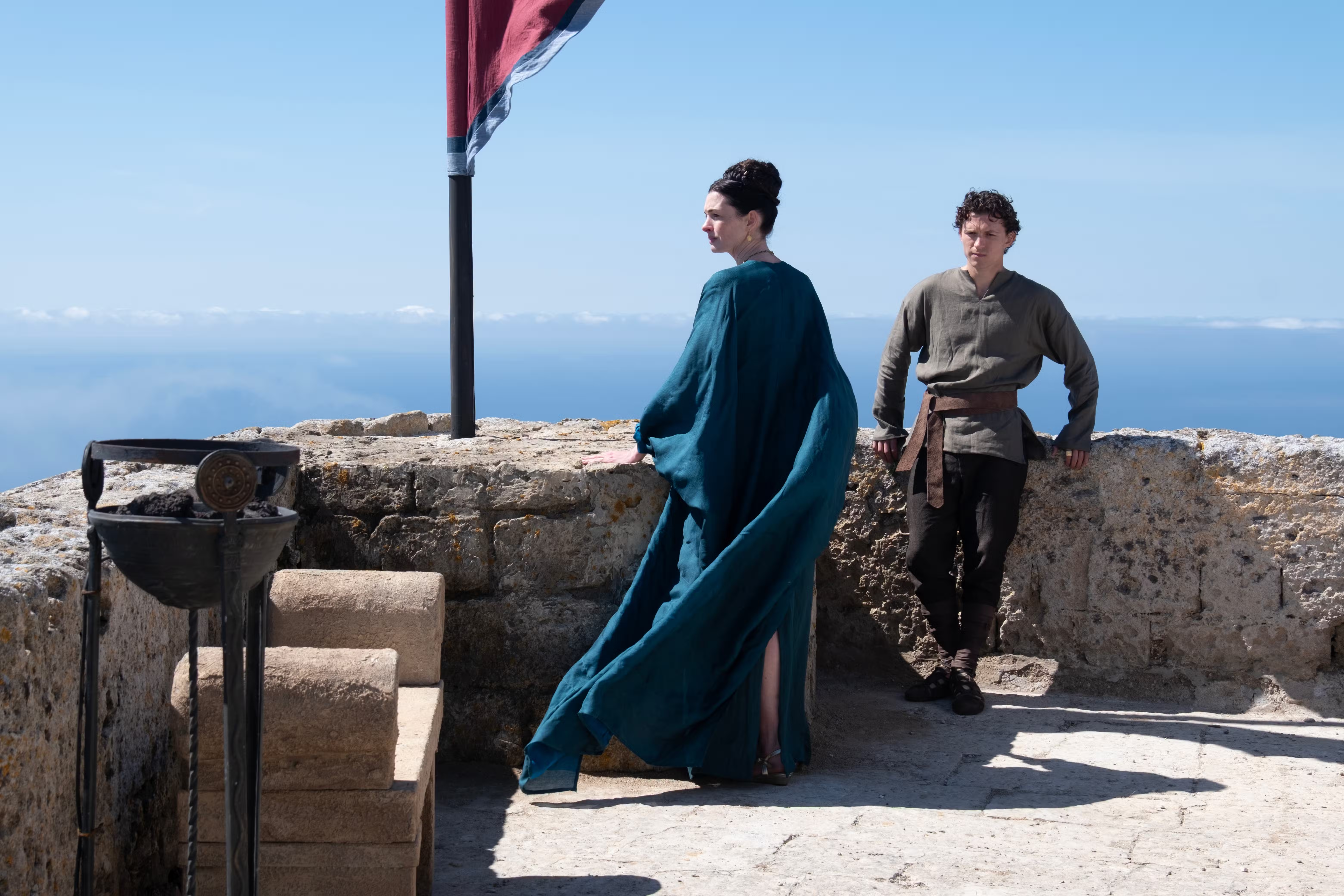 Image: Universal Pictures
Fonte da imagem: Polygon -
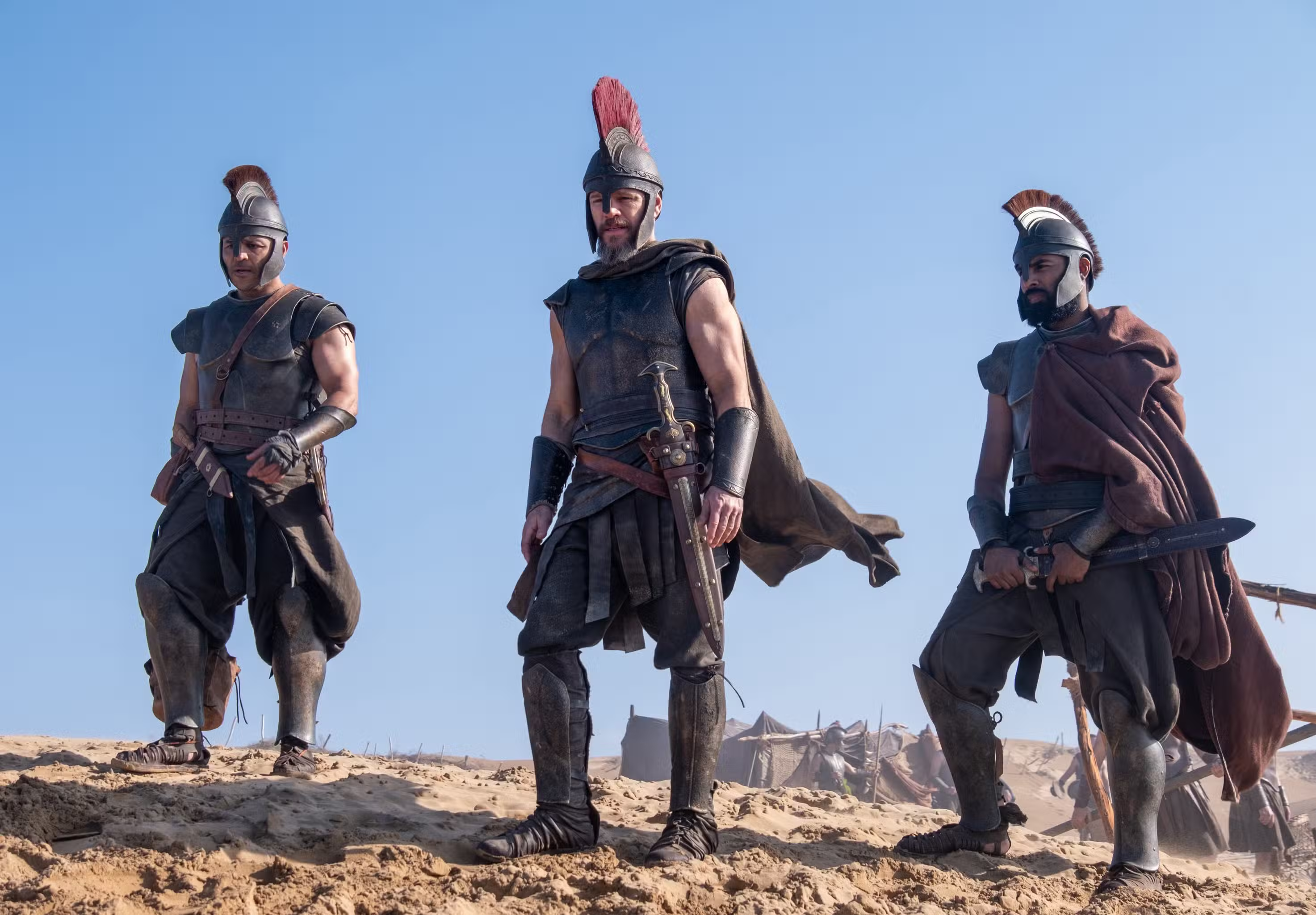 Image: Universal Pictures
Fonte da imagem: Polygon -
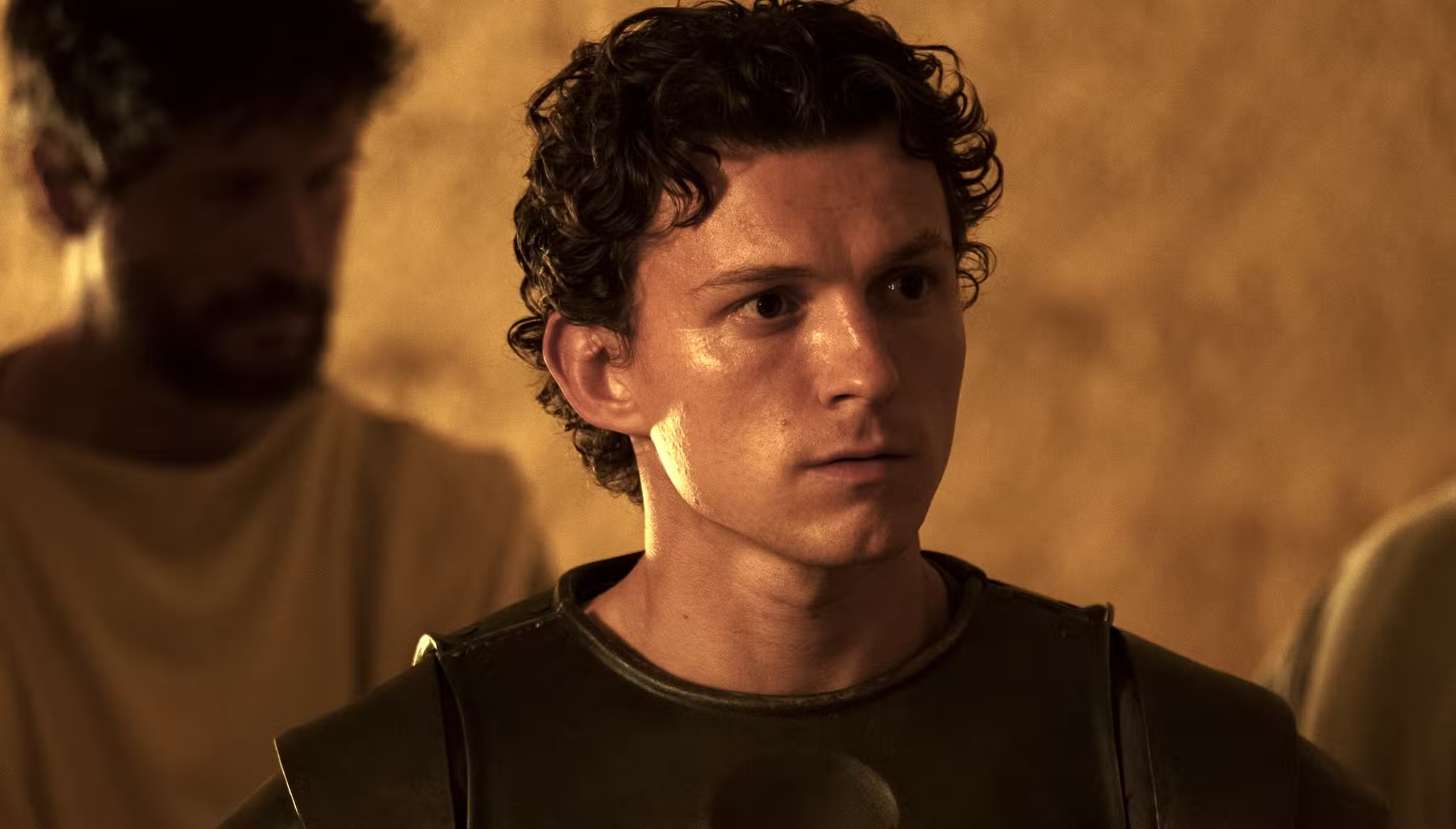 Photo:
O final de ‘A Odisseia’, o épico de Homero, é conhecido: após dez anos de guerra em Troia e mais dez de peregrinação, Odisseu retorna a Ítaca, mata os pretendentes que assediavam Penélope e retoma o trono. Mas o que vem depois? O poeta Eugammon de Cirene, por volta do século VI a.C., escreveu ‘A Telegonia’, um poema perdido do qual restaram resumos, que narra os eventos seguintes. Na trama, Odisseu parte para a Tésprotia, casa-se com a rainha Calídice e tem um filho, Polipetes. Após a morte dela, deixa o filho governando e volta a Ítaca. Enquanto isso, Telégono, filho de Odisseu com a feiticeira Circe, cresce em Ea e sai em busca do pai. Uma tempestade o leva a Ítaca, onde ele rouba o gado da ilha sem saber onde está. Odisseu enfrenta o estranho, e os dois lutam. Telégono mata o pai com uma lança envenenada com o espinho de uma arraia. É uma ironia: Tirésias profetizara que a morte de Odisseu viria ‘do mar’, embora as traduções variem entre ‘do mar’ e ‘longe do mar’. Depois, Telégono leva o corpo, Penélope e Telêmaco de volta a Ea. Circe torna os sobreviventes imortais, Telégono casa-se com Penélope e Telêmaco com Circe. Cada filho de Odisseu casa com a mãe do outro, uma simetria vagamente incestuosa típica da mitologia grega.
Outros textos antigos, como a ‘Biblioteca’ de Pseudo-Apolodoro, as ‘Fábulas’ de Higino e a peça ‘Odisseu Acantoplex’ de Sófocles, também retratam a morte de Odisseu nas mãos do filho com uma lança de arraia. Já Dante Alighieri, na ‘Divina Comédia’ (início do século XIV), coloca Odisseu (chamado Ulisses) no oitavo círculo do Inferno, entre os fraudulentos. Na narrativa de Dante, após deixar a ilha de Circe, Ulisses abandona a viagem de volta para casa e convence seus companheiros a navegar para oeste, em direção ao desconhecido. Eles avistam o Monte do Purgatório ao longe, mas uma tempestade destrói o navio, matando todos. Para Dante, a inteligência de Ulisses, usada para enganar e manipular — como no Cavalo de Troia —, é um pecado grave, e seu abandono da família o condena.
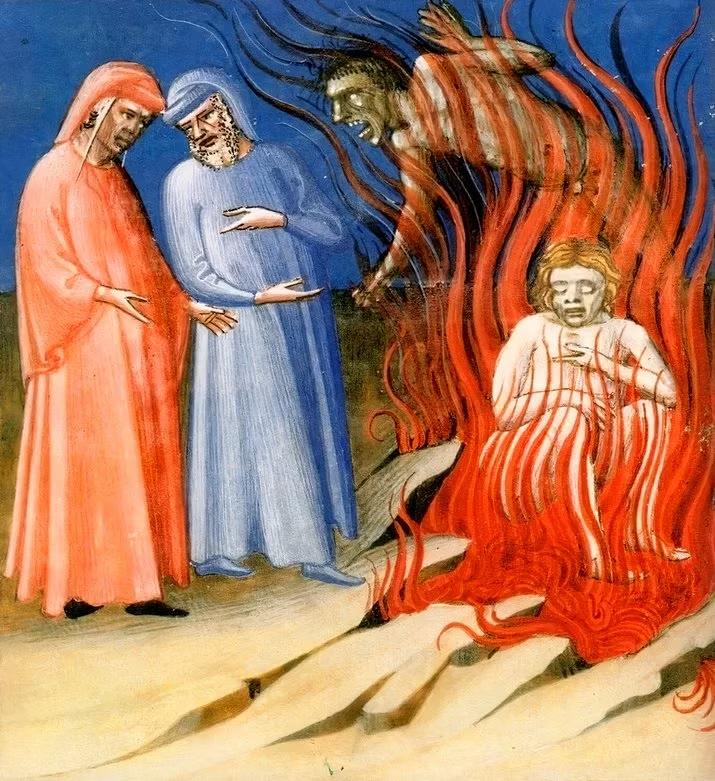
Image: Priamo della Quercia, Dante and Virgil meeting Ulysses and Diomedes, illustration for Inferno Canto 26Fonte da imagem: Polygon Christopher Nolan, em seu filme ‘A Odisseia’, opta por um final diferente. Matt Damon interpreta Odisseu, que, após matar os pretendentes, não enfrenta a guerra civil que ocorre no poema original (evitada apenas pela intervenção da deusa Atena). Em vez disso, Nolan ecoa o final de ‘O Senhor dos Anéis: O Retorno do Rei’: Odisseu entrega o reino a Telêmaco (Tom Holland) e parte com Penélope (Anne Hathaway) para navegar para o oeste desconhecido. É uma imagem romântica, que simboliza o fim de uma era e a passagem do mundo dos deuses para o dos homens. O filme se alinha com o poema ‘Ulisses’, de Alfred Tennyson (1833), em que Odisseu, entediado com a vida doméstica, decide zarpar novamente ‘para além do pôr do sol’.
Nikos Kazantzakis, em ‘A Odisseia: Uma Sequência Moderna’ (1938), leva a história ainda mais longe: Odisseu, entediado, viaja pelo mundo encontrando figuras inspiradas em Buda, Dom Quixote e Jesus Cristo, até morrer na Antártida, quando um iceberg vira seu barco. Nolan, no entanto, não julga Odisseu como Dante; sua jornada final é apresentada como uma passagem pacífica para a lenda. O filme está em cartaz nos cinemas.
Leia mais aqui em inglês: https://www.polygon.com/the-odyssey-ending-explained-what-happens-to-odysseus-after/.
Fonte: Polygon.
2026-07-17 19:30:00








Deixe um comentário