Nintendo has confirmed that it intentionally included loading screens in The Legend of Zelda: Ocarina of Time remake to preserve the essence of the original game, and the internet isn’t in love with the idea.
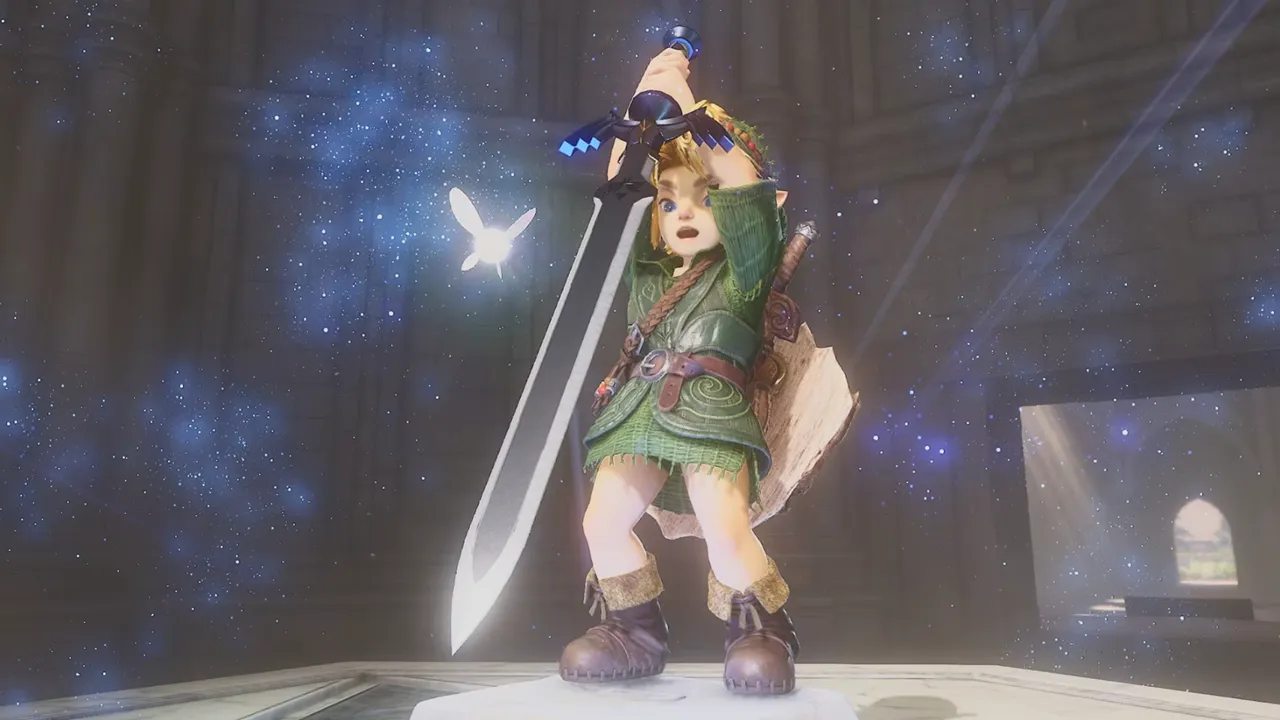
Confirmation that loading screens would cut into the remake’s playtime arrived during a gameplay demonstration shown as part of today’s The Legend of Zelda 40th Anniversary Direct. It’s an extremely brief moment that saw series producer Eiji Aonuma confirm that the Ocarina of Time remake will channel the power of the Nintendo 64 when it launches for Nintendo Switch 2 this November.
By the way, there’s a loading screen whenever you move between areas, Aonuma said as Link and Navi traveled from Kokiri Forest to Hyrule Field. This is something we intentionally kept to preserve the essence of the original game.
Let’s take a second to break the footage down. In the 1998 Ocarina of Time, as well as so many other games before and after it, loading screens allowed developers to pause the experience and load new areas for the player to explore. With the exception of some cutscenes before and after the original transition between Kokiri Forest and Hyrule Field, players really only had control of Link taken away for a few seconds.
The Ocarina of Time remake appears to be a bit more seamless. It’s unclear if Aonuma’s demo will play out the same as the full release, but here, we see the player in control of Link before a black screen consumes the visuals. It and a small Triforce logo in the bottom right corner are on-screen for about three seconds before Young Link trots back into view.
Massive changes to the art style aside, Nintendo’s decision to preserve the essence of 1998’s groundbreaking adventure game seems to mostly line up. That said, in the nearly 30 years since that game came out, players have adapted to an advancing industry that often attempts to hide its loading screens – and that’s if a game has them, at all.
Nintendo intentionally left some loading screen sections in the Ocarina of Time Remake to preserve the feel of the OG. pic.twitter.com/JBRtLfitq4
Choosing to intentionally include loading screens in The Legend of Zelda: Ocarina of Time remake has players split. While some love the idea of a reimagining that pays homage to ’90s N64 gaming, others see the breaks between gameplay as not only a silly addition but a confusing one, too. Some even suspect Nintendo included the loading screens because it needed them on the Switch 2, and not because it wanted them.
Loading times in to preserve feel? one fan said. Lol I don’t believe that for a second. It’s fine that they are in there but don’t say that’s why you did it, Nintendo.
‘Loading times/screen still in the game between areas, added intentional to preserve feel of the game,’ I’m sorry, what? Lmao, one fan said. That’s stupid.
I didn’t mind that, another argued. It makes the areas feel more apart and contrasted. That and also the loading screens are two seconds, so who gives a s**t.
“The loading screen is intentional to keep the nostalgia of the original game”
A Nintendo confirmou que as telas de carregamento no remake de The Legend of Zelda: Ocarina of Time foram incluídas de propósito. A declaração veio durante a demonstração de gameplay exibida no The Legend of Zelda 40th Anniversary Direct, quando o produtor da série, Eiji Aonuma, explicou que a decisão busca preservar a essência do jogo original.
No vídeo, Link e Navi aparecem saindo de Kokiri Forest em direção a Hyrule Field. A transição é interrompida por uma tela preta com o símbolo da Triforce no canto inferior direito, que permanece visível por cerca de três segundos antes do controle voltar ao jogador. No game de Nintendo 64, de 1998, as pausas para carregamento eram comuns e tiravam o controle do jogador por alguns instantes. No remake, a passagem parece mais fluida, mas ainda mantém o intervalo.
A justificativa da Nintendo dividiu opiniões na comunidade. Enquanto parte dos fãs enxerga as telas como uma forma de homenagear a experiência dos anos 90, outros consideram a inclusão desnecessária. Alguns jogadores chegaram a duvidar do motivo apresentado, sugerindo que as pausas podem existir por necessidade técnica do Switch 2, e não por escolha criativa.
Fonte da imagem: IGN
As reações nas redes sociais misturam críticas e elogios. Um fã ironizou a explicação, dizendo não acreditar que o carregamento foi adicionado para preservar a sensação original. Outro classificou a decisão como estúpida. Houve também quem defendesse a abordagem, argumentando que as telas curtas ajudam a separar as áreas e que, por durarem apenas dois segundos, não chegam a incomodar.
O remake de The Legend of Zelda: Ocarina of Time será lançado para Nintendo Switch 2 em 5 de novembro de 2026. Além das telas de carregamento, o jogo chega com mudanças visuais significativas, que também geraram repercussão entre os fãs.
Visão Gamer: A inclusão de telas de carregamento pode soar como um detalhe menor, mas mexe diretamente com o ritmo de quem jogou o clássico de 1998. Para quem espera uma experiência mais moderna, a pausa de três segundos pode incomodar; para outros, pode reforçar a nostalgia. O importante é que a decisão foi assumida pela Nintendo como intencional, o que tira qualquer dúvida sobre um possível problema técnico no Switch 2.








Deixe um comentário